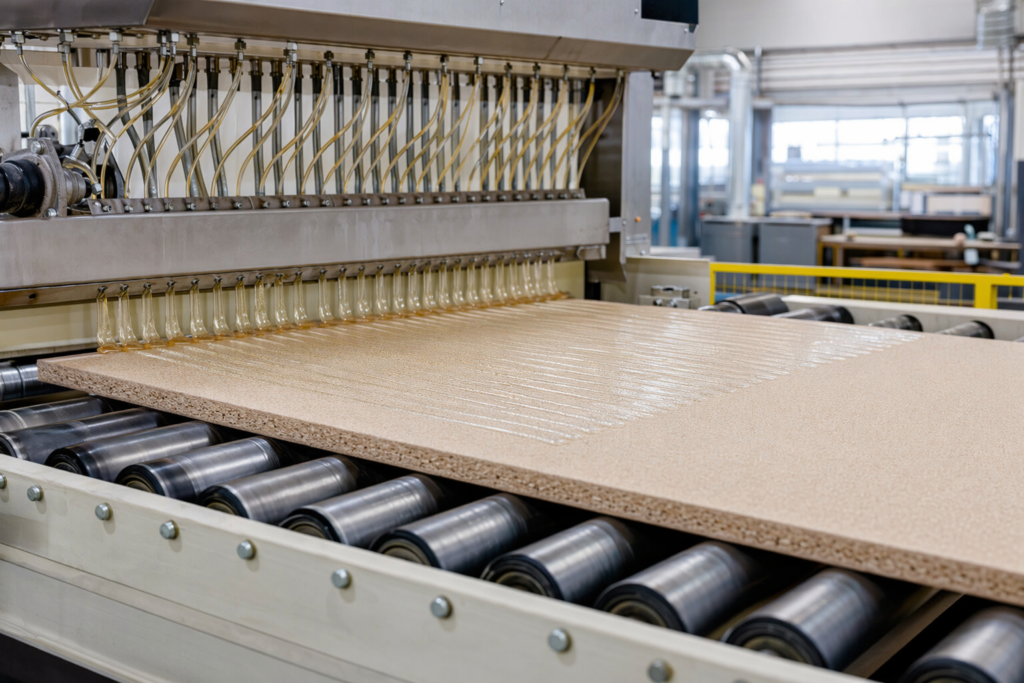
Flat lamination and profile wrapping look simple from the outside: apply adhesive, press film or veneer, trim, and pack. In real furniture production, the adhesive decision affects surface quality, edge lift, corner stability, odor complaints, rework, and how well finished panels survive storage and export shipping. For factories in Vietnam, Indonesia, and other warm, humid markets, the selection of PUR hot melt adhesive should be based on actual materials, machine settings, climate, and customer performance requirements.
This guide is written for purchasing managers, importers, and production engineers who need a practical way to choose PUR adhesive for flat lamination, profile wrapping, decorative panels, cabinet parts, doors, and furniture components. It also explains when EVA hot melt adhesive may still be suitable for less demanding work, so buyers can avoid over-specifying or under-specifying the adhesive.
Quick Answer: When PUR Makes Sense for Lamination and Wrapping
PUR hot melt adhesive is usually considered when the finished part needs stronger moisture resistance, higher heat resistance, better long-term bonding, thin glue lines, and stable performance on wrapped profiles or laminated panels. It is especially relevant for kitchen cabinets, bathroom furniture, decorative wall panels, doors, export furniture, and parts that may face humidity during storage, shipping, or use.
EVA hot melt adhesive can still be a good option for standard flat work, lower stress applications, simple substrates, and factories that need economical operation with familiar equipment. The best decision is not based only on adhesive family. It should be confirmed by trial production using the same film, veneer, board, machine speed, pressure, and workshop conditions as the real order.
PUR Hot Melt Adhesive Buyer Decision Table
| Production condition | When PUR is worth evaluating | What to test before ordering |
|---|---|---|
| Flat laminated furniture panels | When surface stability, moisture resistance, or export durability is important | Wetting, coating weight, panel flatness, and appearance after curing |
| Profile wrapping and shaped parts | When films or veneers must hold around corners, grooves, and curved profiles | Corner lift, spring-back, trimming quality, and bond after conditioning |
| Warm or humid supply chains | When products face humid workshops, warehousing, or container shipping | Storage discipline, packaging resealing, and finished-part performance after humidity exposure |
| Standard, lower-stress production | Compare PUR with EVA when the application has a tight cost target and modest performance requirements | Total finished-part cost, scrap rate, and machine compatibility |
Flat Lamination vs Profile Wrapping: Different Adhesive Stress
Flat lamination applies decorative film, paper, veneer, or other surface material onto a flat board. The main risks are poor wetting, bubbles, telegraphing defects, surface unevenness, and weak bond after storage. Adhesive viscosity, coating weight, line speed, pressure, and substrate cleanliness all affect the final surface.
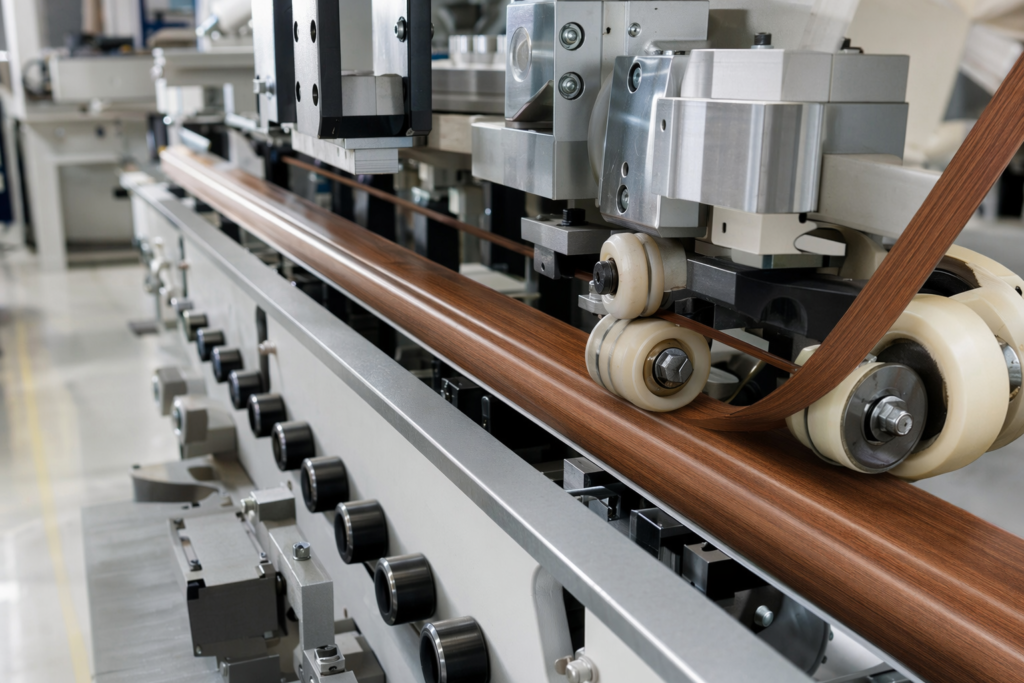
Profile wrapping is more demanding because the material bends around shaped profiles, corners, grooves, and narrow contact areas. The adhesive layer must hold the covering material under tension while keeping the profile clean and consistent. If the adhesive does not match the film, wood veneer, MDF, PVC, or primer system, factories may see corner lifting, spring-back, cracking, or delayed delamination.
Key PUR Hot Melt Adhesive Selection Factors
1. Substrate and surface material
MDF, particle board, plywood, solid wood, PVC film, PET film, paper foil, HPL, CPL, veneer, and decorative profiles do not bond in exactly the same way. Buyers should send the supplier real material samples or detailed specifications before asking for a grade recommendation. A PUR grade that performs well on one film can still need adjustment for another film because surface energy, primer quality, release agents, and dust can change the bond.
2. Open time and line speed
Open time must fit the machine. If the adhesive loses tack too quickly, wetting and pressing suffer. If it stays open too long, trimming, stacking, and handling can become unstable. A useful supplier discussion should include roller or nozzle application method, working temperature, feed speed, press section length, workshop temperature, and part geometry.
3. Heat and humidity exposure
Vietnam and Indonesia furniture supply chains often include warm workshops, high humidity, container shipping, and warehouse storage before the final customer receives the product. PUR can help where the product needs better resistance after curing, but uncured PUR must be protected from moisture before use. Packaging format, storage temperature, resealing practice, and daily consumption planning matter as much as the adhesive grade.
4. Glue line and appearance target
For decorative panels and wrapped profiles, buyers often care about thin glue lines, clean corners, smooth surfaces, and no visible adhesive bleed. The right PUR adhesive should support the appearance target without creating excessive cleaning work. Coating weight should be controlled carefully: more adhesive is not automatically better and can increase cost, squeeze-out, and surface defects.
Recommended Trial Process Before Bulk Purchasing
- Define the exact application: flat lamination, profile wrapping, door skin bonding, cabinet panel production, or mixed furniture use.
- List the substrate, surface material, primer status, panel thickness, and any special coating or release treatment.
- Record machine type, application temperature, line speed, pressure, roller or nozzle system, and normal workshop temperature.
- Run a small sample batch with realistic coating weight and production speed instead of only hand-testing.
- Check immediate handling, surface appearance, corner stability, and trimming quality.
- Evaluate bond after curing and after storage under realistic heat and humidity conditions.
- Compare total production cost, including scrap, cleaning, downtime, complaint risk, and storage loss, not only price per kilogram.
PUR vs EVA for Cost Control
EVA usually has a lower entry cost and simpler operation. It is often suitable for standard furniture lines where moisture resistance, heat resistance, and wrapped-profile stress are not severe. PUR often costs more per kilogram and requires better handling discipline, but it may reduce rework or customer complaints when the application truly needs higher durability.
For procurement teams, the practical comparison is total cost per finished part. This includes adhesive consumption, production speed, rejected panels, cleaning time, operator training, shelf-life management, and after-sales quality risk. A cheaper adhesive can become expensive if it causes lifting, blistering, or inconsistent appearance in export orders.
Compliance and Documentation for Export Buyers
Many overseas buyers ask about odor, safety data, restricted substances, and environmental compliance. The responsible approach is to request current technical data sheets, safety data sheets, and relevant test documentation for the exact adhesive grade. Do not assume that every PUR hot melt adhesive or EVA hot melt adhesive automatically meets every destination market or customer requirement.
Before confirming a grade, share the destination market, customer standard, end-use product, substrate, and production process with the supplier. QG Bond can discuss adhesive selection, sample testing, and document needs through its hot melt adhesive services page or the contact page.
Procurement Checklist for Vietnam and Indonesia Factories
- Choose the adhesive by application, not only by PUR or EVA label.
- Test with actual local materials, not substitute samples.
- Confirm packaging format and daily consumption to reduce PUR moisture exposure.
- Ask for operating temperature, viscosity range, open time, and recommended coating weight.
- Check whether existing equipment needs cleaning, nozzle, roller, or tank adjustments.
- Review storage conditions before placing repeat orders or container orders.
- Keep sample panels for comparison after curing and after humidity exposure.
FAQ
Is PUR hot melt adhesive always required for profile wrapping?
No. PUR is often preferred for demanding wrapped profiles, high humidity exposure, and higher durability requirements, but EVA can still work for some simple profiles and cost-sensitive products. The profile shape, covering material, line speed, and customer standard should guide the choice.
How long should a factory wait before judging PUR bond strength?
PUR gains handling strength as it cools, then continues curing with moisture. Buyers should evaluate immediate handling and also check bond performance after the adhesive has had enough time to cure under realistic conditions. The exact evaluation window should follow the supplier’s technical guidance for the selected grade.
Can one PUR adhesive grade cover both flat lamination and profile wrapping?
Sometimes, but it should not be assumed. Flat lamination and profile wrapping can require different viscosity, open time, green strength, and heat resistance. Trial production is the safest way to confirm whether one grade can cover both applications.
What information should buyers send before requesting samples?
Send the application, substrate, surface material, machine type, application method, line speed, temperature setting, workshop conditions, destination market, and target performance. Buyers can start from the QG Bond homepage or contact the team directly for sample discussion.
Conclusion
For flat lamination and profile wrapping, PUR hot melt adhesive is most useful when the finished product needs stronger durability, cleaner appearance, moisture resistance, and stable performance in warm or humid supply chains. EVA remains valuable for standard applications where cost, simplicity, and operator familiarity are the main priorities. The best procurement decision comes from matching adhesive chemistry to actual materials, equipment, climate, and customer requirements.
Suggested image alt text for this topic: “PUR hot melt adhesive for flat lamination production”, “Profile wrapping line using hot melt adhesive on decorative furniture profiles”, and “Furniture panel lamination adhesive testing for humid Southeast Asia factories”.